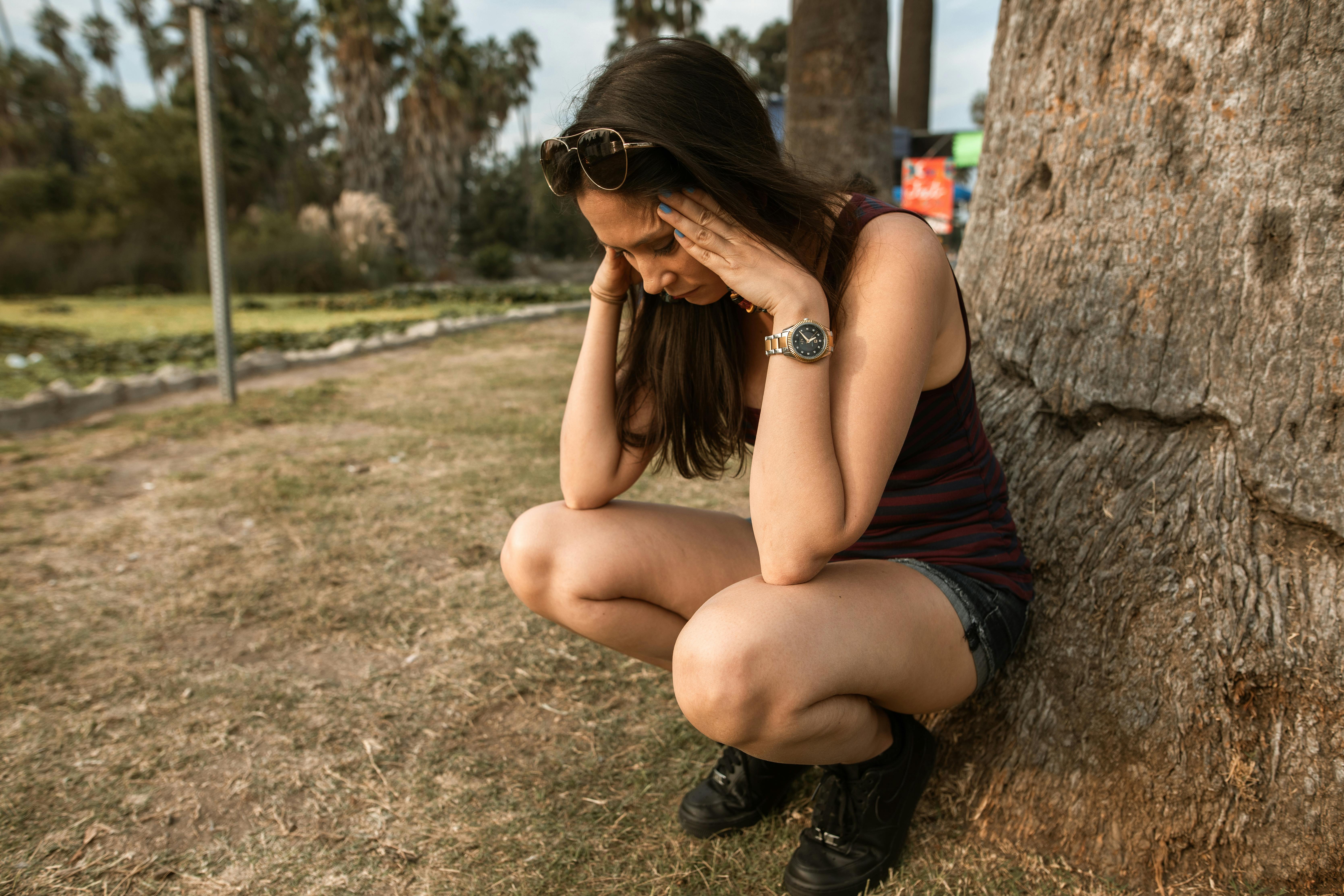
There's a moment that happens in almost every therapy room I've been in. A client arrives with a problem. A relationship that's deteriorating, a body that won't stop keeping score, a thought pattern that runs on a loop no matter how many times they try to out-think it. And at some point in our work together, we arrive at the same place: the edge of what they can control.
It's one of the most uncomfortable places a person can be. And it's one of the most important.
Big P, Little P
I've started thinking about powerlessness in two categories, what I call "Big P" and "little p."
Big P Powerlessness is the existential kind. The recognition that we cannot control other people, that we will lose things we love, that life will deliver experiences we didn't choose and can't undo. It's the kind of powerlessness that philosophers and spiritual traditions have grappled with for millennia, and there's a reason for that: it never stops being relevant.
Then there's little p powerlessness. The everyday kind that most of us encounter without naming it. The coworker who won't change. The parent who can't hear you. The partner who keeps missing the point. The body that carries tension no matter what you do. These moments don't feel existential in the philosophical sense, but they accumulate. And the way we respond to them (the strategies we build to avoid feeling powerless) often becomes the very thing that brings people into my office.
How We Avoid It
Most of the coping strategies I see in my practice are, at their core, strategies for avoiding powerlessness. Control, perfectionism, people-pleasing, overwork, intellectualization, emotional shutdown. These are all ways of saying: I refuse to feel like I can't do anything about this.
And they make sense. Powerlessness is deeply uncomfortable. For many people, it's the feeling underneath the feeling. The thing that anxiety, anger, and depression are all trying to protect them from reaching.
But here's what I've learned from sitting with it every day, across hundreds of sessions, with people from every kind of background: the avoidance of powerlessness costs more than powerlessness itself.
When you organize your life around never feeling out of control, your world gets smaller. Relationships become transactional. Vulnerability becomes impossible. You trade depth for safety, and after a while, that trade stops working.
What Happens When People Stay With It
The most transformative moments I witness in therapy aren't breakthroughs of insight. They're moments of surrender. Not in a defeated sense, but in the sense of finally allowing a feeling to exist without trying to fix it, fight it, or flee from it.
When a client stops running from their powerlessness and actually sits with it (lets it be present in the room without rushing to solve it) something shifts. The feeling, which they've spent years avoiding because they assumed it would destroy them, turns out to be survivable. Painful, yes. But survivable.
And on the other side of that experience, there's usually a strange kind of relief. Not because the problem has been solved, but because the exhausting project of avoiding the feeling has finally been set down.
The Paradox
There's a paradox at the center of this work that I come back to constantly: the more willing you are to feel powerless, the less powerless you actually are.
When you stop spending energy fighting what you can't control, you free up an enormous amount of capacity to invest in what you can control. How you respond, what you tolerate, where you place your attention, who you choose to be in the face of difficulty.
That's not a cliché. I watch it happen. The client who finally stops trying to change their partner and redirects that energy toward their own growth. The person who accepts that their childhood can't be rewritten and starts building something new. The high-achiever who lets go of the illusion that enough success will finally make them feel safe, and discovers, on the other side of that illusion, a version of themselves that's more grounded than anything they've achieved.
Why This Matters Beyond the Therapy Room
I write about this not because powerlessness is a clinical concept, but because I believe it's one of the most universal human experiences, and one of the least discussed. We live in a culture that worships agency, optimization, and control. There's an app for everything. A hack for everything. A five-step plan for everything.
And yet the things that matter most (love, loss, meaning, connection) are irreducibly uncertain. Learning to be with that uncertainty, rather than constantly armoring against it, might be the most important skill we never talk about.
I sit with powerlessness every day. My clients teach me about it constantly. And what I keep learning is this: the willingness to feel it is not weakness. It's the beginning of a different kind of strength.